
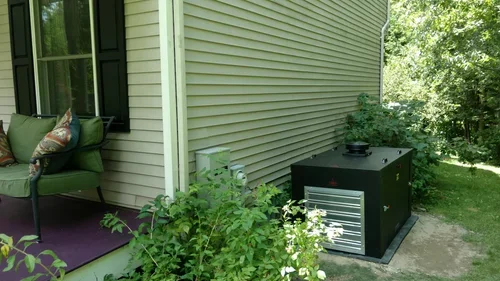
Even if your generator only runs when you truly need it, neighborhood sound travels in sneaky ways, and people notice patterns fast. In many communities, it takes one irritated neighbor and one email to the HOA to kick off the annoying neighbor pipeline. That’s why avoiding HOA fines with noise enclosures for generators is a smart way to keep your backup power plan from turning into a neighborhood issue.
Why Generator Noise Carries Farther Than You Expect
A generator doesn’t just “sound loud,” it produces a steady, low-frequency rumble that travels through open air and even through structures more efficiently than you’d think. At night, when traffic and everyday background noise drop, that same generator suddenly feels twice as noticeable.
Sound can also bounce off fences, walls, and hard landscaping, basically turning your yard into a little echo chamber. That’s why a unit that seems tolerable standing next to it can still feel disruptive from the neighbor’s bedroom.
How One Complaint Turns Into a Paper Trail
HOAs often act on the first complaint because it’s easy to document and enforce. Once there’s a written record, your generator is “a known issue,” and the next outage can trigger faster action, even if the sound level didn’t change. A warning letter can also include language like “ongoing nuisance,” which sets the stage for fines without much back-and-forth.
Why Timing Matters
Many associations enforce quiet hours more aggressively than daytime noise, so the same generator that slides under the radar at 2 p.m. can cause drama at 2 a.m. Outages also make people more sensitive; they’re stressed, they’re trying to sleep, and they’re already frustrated. A generator that runs for hours straight during those times can feel like it’s “never stopping,” even if it’s doing exactly what it’s supposed to do.

What HOAs Usually Mean by “Excessive Noise”
HOA rules are often broad on purpose, with phrases like “unreasonable disturbance” or “nuisance noise.” That vagueness lets them enforce based on context and complaints instead of strict numbers. If you want to stay out of trouble, it helps to understand what they’re really reacting to.
Decibels and Annoyance
Two generators can measure similarly in volume and still feel totally different to a neighbor. The pitch, vibration, and constant rhythm are what make it hard to ignore, especially if the sound has a low “thump” that comes through walls or closed windows. Some people can tolerate a louder sound that comes and goes, but they’ll hate a steady hum that lasts all night. A good enclosure targets that overall sound profile, not just the raw loudness.
The “Line of Sight” Problem
If your generator sits where the sound has a straight shot into someone else’s living space, you’re more likely to get complaints. Think fence lines, side yards, and spots that face a neighbor’s patio or bedroom window. Sound tends to travel in the direction it’s pushed, and hard surfaces reflect it right back into the neighborhood. An enclosure helps because it breaks that direct path, forcing sound to disperse instead of projecting outward like a speaker.
Why Appearance Can Affect Enforcement
It’s frustrating, but it’s real: messy setups get noticed faster. A generator sitting out in the open can draw attention even before anyone complains about sound. Some HOAs are more “visual” than they admit, and if something looks temporary, it can get flagged as an exterior violation alongside the noise issue. A clean, intentional-looking enclosure that blends with your exterior can reduce both sound complaints and the odds of HOA scrutiny.
How Noise Enclosures Help You Stay Compliant
A noise enclosure is basically a sound-control barrier designed to reduce what escapes into your yard and into your neighbors’ space. Done right, it can make a generator feel dramatically less intrusive without sacrificing safety. The key is choosing an enclosure that’s actually built for generators, not just “something that blocks sound.”
How Enclosures Reduce Noise
The best enclosures do two things at once: they block sound from traveling outward, and they absorb sound inside so it doesn’t bounce around and leak through gaps. If you only “block” noise but don’t absorb it, the enclosure can act like a drum, pushing sound out of vents even more aggressively. A purpose-built design manages airflow while controlling how sound moves through the system.
Ventilation Is Nonnegotiable
Generators generate heat, and an enclosure that traps heat is a risky setup that can shorten equipment life or create safety hazards. The fix isn’t skipping the enclosure; it’s using proper ventilation strategies like baffled vents, acoustic ducting, and spacing that allows air to move the way it should. Good designs keep noise from escaping in a straight line while still letting the generator breathe.
Choosing the Right Enclosure for Your Generator
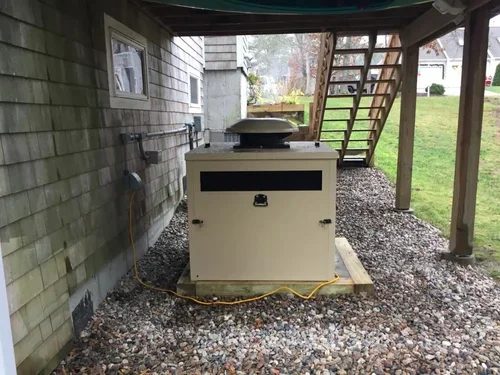
What works for you will depend on generator size, placement, and how strict your HOA is. Some communities care mostly about noise. Others care just as much about how equipment looks from the street or from adjacent lots. The sweet spot is an enclosure that looks intentional and performs well acoustically.
Prebuilt vs. Custom
Prebuilt enclosures are convenient because they’re typically designed with generator access, airflow, and weather resistance in mind. Custom builds can be great when your space is tight or your HOA requires a certain exterior look, but they need to be done thoughtfully to avoid heat and maintenance issues. The biggest factor is whether the enclosure is designed with acoustic absorption, baffled airflow, and service access. If it’s hard to maintain, it’s harder to keep compliant long term.
Placement Decisions That Quiet Things Down
Even before the enclosure, the generator's location already matters. If you can increase the distance from property lines, face the exhaust away from neighboring homes, and avoid pointing the loudest side toward someone’s windows, you’ll reduce the chance of complaints immediately. A few feet can matter more than people think, especially in dense neighborhoods. Then the enclosure takes that improvement and locks it in by reducing direct sound travel even further.
Staying Powered Without Becoming the Loud Neighbor
You shouldn’t have to choose between keeping your home running and keeping the peace. With the right approach, you can make a generator blend into the neighborhood rather than stand out as “that house” everyone talks about. Avoiding HOA fines with noise enclosures for generators is a practical way to protect your backup power investment and your relationship with your neighbors.
Tired of all the noise complaints? Zombie Box International offers a generator enclosure designed specifically to reduce generator noise without turning your yard into a dramatic DIY science project. It is the first and only patented portable, noise-reducing system of its kind, so you can keep the backup power and cut down on the complaints. Explore our products today!